
Seeing is no longer believing online. As deepfake technology becomes more convincing, distinguishing between real people and artificial content is increasingly difficult, making identity verification a critical part of building trust in digital spaces.
The rise of synthetic media has created a new layer of uncertainty across social platforms, professional networks, and public communication. Understanding what deepfakes are and how to counter their risks is essential for anyone with an online presence.
What Are Deepfakes and Why Do They Matter?
Deepfakes are AI-generated or AI-altered media designed to mimic real people. Using machine learning models, these systems can replicate facial expressions, voice patterns, and gestures with striking realism. The result is content that appears authentic but is entirely fabricated.
This matters because digital communication relies heavily on visual and auditory cues. When those cues can be manipulated effortlessly, it becomes harder to trust what we see. From fake interviews to altered videos of public figures, deepfakes blur the line between reality and fabrication.
The issue is no longer theoretical. Deepfakes are already being used across social media, messaging platforms, and even professional environments, making online trust increasingly fragile.
The Real Risks of Deepfake Technology
While deepfakes can be entertaining, their misuse presents serious risks across multiple contexts. The ability to convincingly impersonate someone introduces new forms of digital harm that are difficult to detect and even harder to prevent.
Some of the most significant risks include:
- Reputation damage: Fabricated videos can falsely depict individuals saying or doing harmful things.
- Fraud and scams: Impersonation can be used to manipulate financial transactions or sensitive decisions.
- Misinformation: Deepfakes can spread false narratives at scale.
- Erosion of trust: As fake content increases, genuine content becomes less credible.
These risks highlight a growing problem: it is no longer enough to rely on content alone as proof of authenticity. A new approach is required—one that focuses on verifiable human presence rather than just appearance.
Why Identity Verification Is Becoming Essential
In an environment where media can be easily manipulated, identity verification provides a stronger foundation for trust. Instead of asking “does this look real?”, verification asks “was a real person present at a specific moment?”.
This shift is crucial. It moves trust away from content and towards evidence. By confirming that a real human completed a verification process, platforms and audiences gain a clearer signal of authenticity.
Technologies like biometric liveness verification play a key role here. They require active participation, making it significantly harder to replicate with static images or pre-generated media. For a deeper look at how this technology works, see AI identity verification technology.
However, verification must be implemented carefully. Systems that store biometric data or build centralised identity databases introduce their own privacy risks. The challenge is to balance trust and privacy without compromising either.
How PRVEN Approaches Digital Identity and Trust
PRVEN addresses this challenge by focusing on verification events rather than identity storage. Instead of building a database of faces, it records proof that a biometric verification took place at a specific time.
When a user completes biometric liveness verification, PRVEN generates a public proof record. This record confirms that a real human was present during the verification process, without storing biometric data long term.
Key aspects of this approach include:
- No storage of full biometric images after verification
- No biometric templates or face databases
- A timestamped verification record that can be shared publicly
- A simple, accessible way to demonstrate authenticity online
This model helps reduce uncertainty while maintaining strong privacy protections. It provides a way to prove you are human without creating long-term data risks.
To understand more about how verification technology supports security and trust, explore the role of AI in identity verification.
Verification Records vs Content-Based Trust
Traditionally, trust online has been based on content—photos, videos, and written communication. But in the era of deepfakes, content can no longer stand alone as proof.
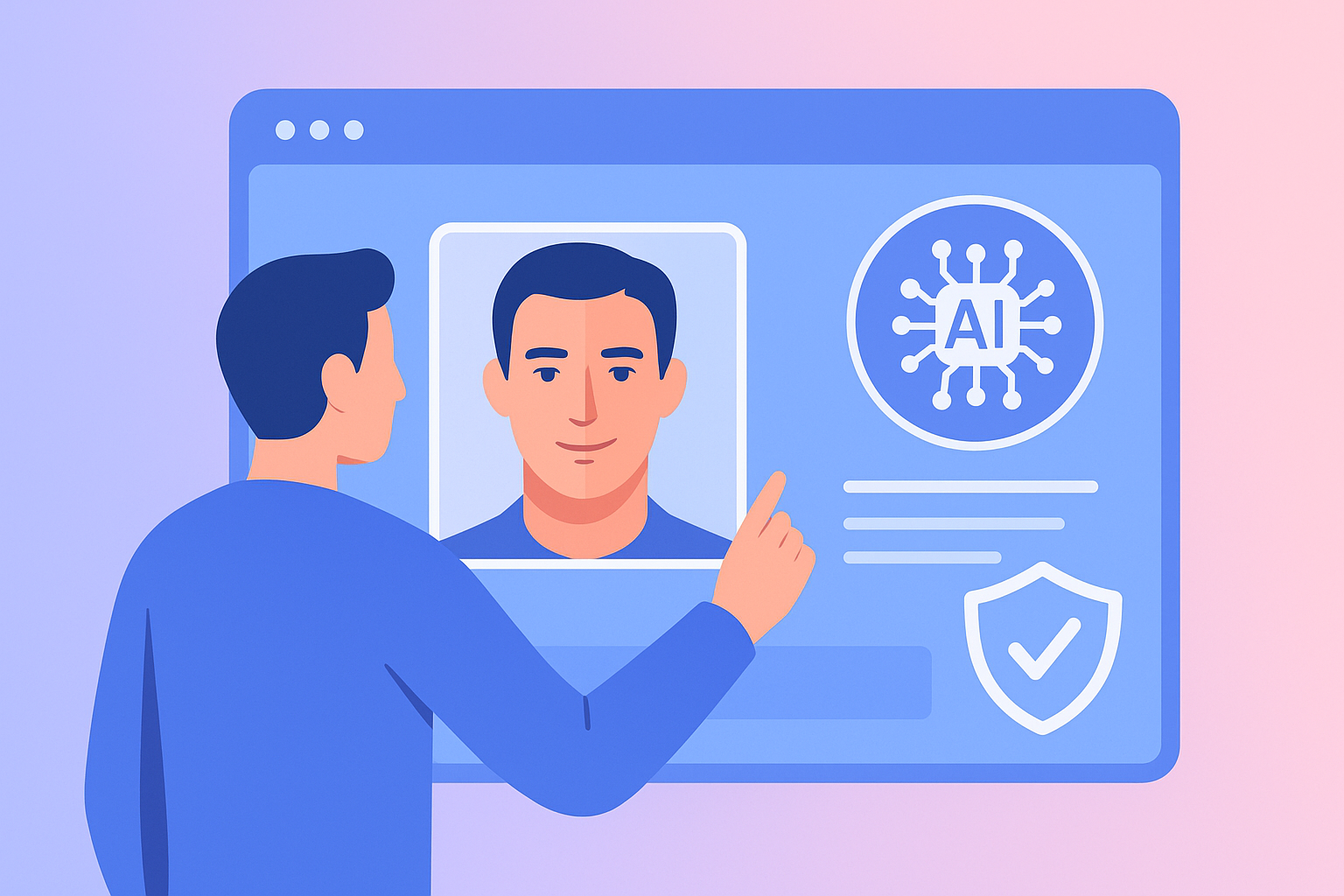
Verification records introduce a different model. Instead of trusting what is seen, users can rely on evidence that a verification event occurred. This creates a more stable foundation for trust, particularly in high-risk environments such as public profiles, professional services, and digital communities.
A PRVEN verification record includes:
- A unique verification ID
- A timestamp of the verification event
- Liveness and similarity results
- A reference image hash and optional thumbnail
This information forms a consistent and shareable proof that can be used across platforms, reducing ambiguity and helping others make more informed decisions.
The Role of Public Proof in Combating Deepfakes
One of the most effective ways to counter deepfake risks is to introduce independent, verifiable proof that exists outside of the content itself. Public verification pages provide this layer of assurance.
With PRVEN, each verification results in a dedicated public page that confirms the event took place. This allows viewers to cross-check authenticity rather than relying solely on visual media.
This approach does not claim to detect deepfakes or monitor the internet. Instead, it offers a practical tool to reduce uncertainty by providing verifiable evidence tied to a real human interaction.
To see how this fits into broader security developments, read how AI is shaping identity verification systems.
Building a More Trustworthy Digital Environment
The spread of deepfake technology is unlikely to slow down. As tools become more accessible, the volume of synthetic content will continue to grow. This makes it essential to adopt systems that prioritise verifiability over appearance.
Identity verification platforms like PRVEN contribute to this shift by offering a clear, privacy-conscious way to demonstrate authenticity. They do not eliminate risk entirely, but they provide a meaningful signal in an otherwise uncertain environment.
For creators, professionals, and public figures, having a trusted verification record can make a significant difference. It gives audiences a way to distinguish between verified individuals and unverified content.
As digital interactions continue to expand, the ability to prove that a real human was present during a specific moment will become increasingly valuable.
Verify Your Identity with PRVEN
As fraud, impersonation, and AI-generated misuse become more common online, proving that you are real is becoming increasingly important. PRVEN helps you create a trusted verification record that others can rely on.