
Deepfake scams are no longer fringe threats—they are a practical, growing risk affecting businesses, creators, and everyday online interactions. As synthetic media becomes harder to detect, proving that a real human is behind an account is becoming essential to maintaining trust.
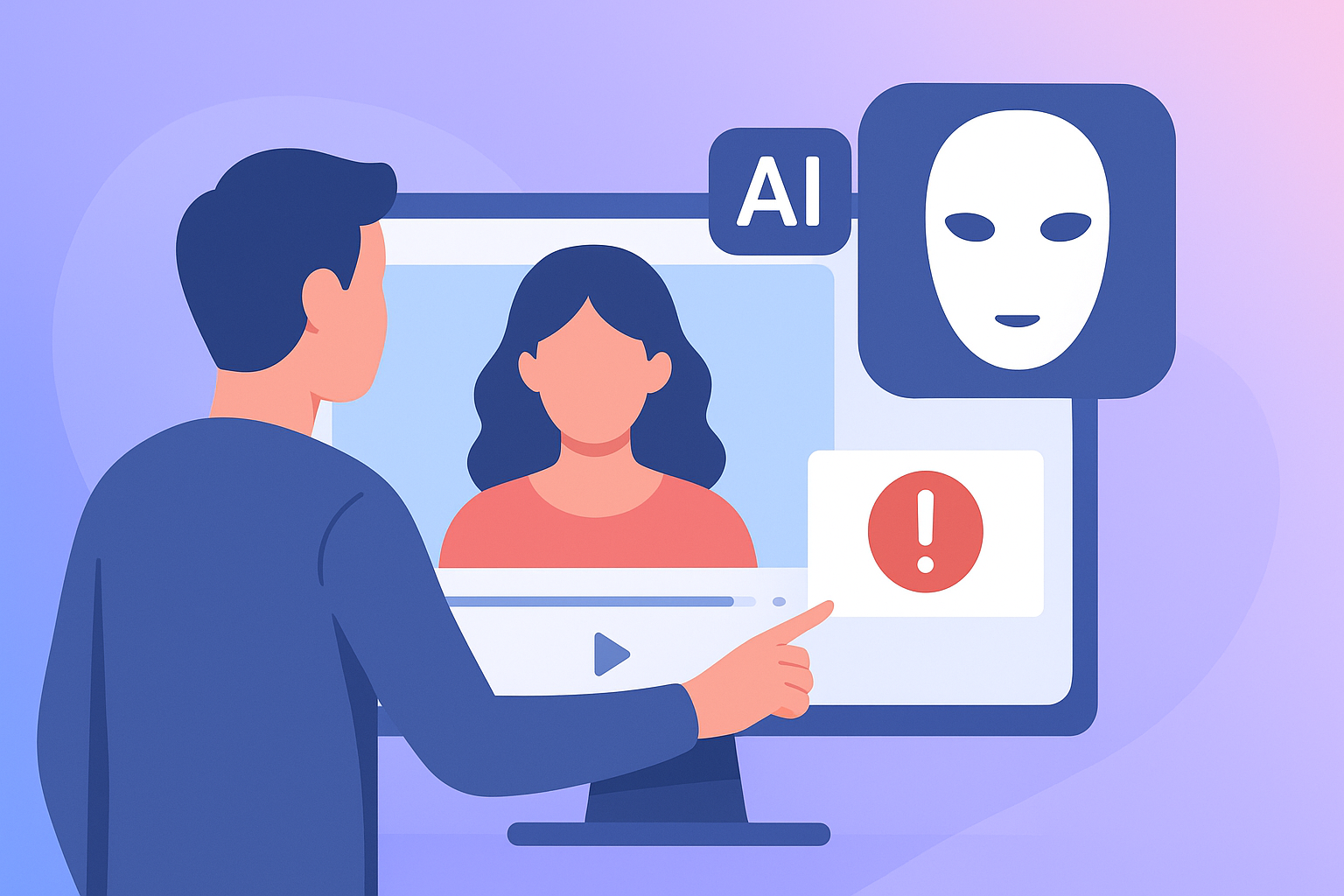
In a landscape where faces, voices, and identities can be cloned, verifying authenticity is no longer optional. This shift is driving demand for reliable identity verification systems that focus on proving presence rather than making unrealistic claims about identity certainty.
Understanding Deepfake Scams and Their Impact
Deepfake technology enables the creation of highly convincing synthetic videos and audio. While it has legitimate uses in entertainment and media, it is increasingly exploited for fraud and impersonation. Attackers can fabricate realistic content that appears to show real individuals saying or doing things they never did.
These scams often target trust. A deepfake video of a company executive could be used to authorise payments, while cloned voices may deceive employees into sharing sensitive information. The core issue is not just deception—it is the erosion of confidence in digital identity.
To explore how these risks are evolving, read understanding online impersonation risks and prevention, which breaks down how impersonation techniques are being used today.
As these threats scale, simply “looking real” is no longer enough. Online environments require stronger signals of authenticity.
Why Traditional Trust Signals Are No Longer Enough
Historically, trust online relied on indicators like profile photos, verified badges, or follower counts. These signals are increasingly easy to replicate or manipulate. Deepfake tools can generate convincing visuals, while automated systems can mimic behaviour at scale.
This creates a gap between appearance and reality. A profile may look legitimate, but there is no guarantee that a real person was ever present behind it. This is where verification based on real human presence becomes critical.
Rather than relying on static signals, modern approaches focus on whether a person actually completed a verification process. This shift moves trust from perception to evidence.
How Identity Verification Reduces Deepfake Risk
Identity verification helps reduce deepfake risk by introducing a measurable, recorded step where a real human must be present. Instead of trying to detect manipulated content after the fact, verification establishes a trusted point in time.
One approach is biometric liveness verification, which confirms that a live person is interacting with a system during the verification event. This makes it significantly harder for static images, pre-recorded videos, or AI-generated content to pass as genuine.
PRVEN applies this model by creating a public proof record of a verification event. It does not attempt to monitor behaviour or guarantee identity. Instead, it records that a biometric liveness verification took place at a specific time, producing a consistent and shareable verification reference.
This approach helps reduce ambiguity. When someone presents a PRVEN verification, others can see that a real human was present during that moment—without relying on assumptions.
Learn more about the risks of impersonation and why verification matters in this guide to online impersonation threats.
The Role of Public Proof in Digital Identity
A major challenge in online trust is visibility. Verification processes often happen behind closed systems, leaving others unable to confirm whether checks have taken place. This lack of transparency weakens trust.
PRVEN addresses this by generating a public verification page linked to a specific verification event. This page includes key details such as timestamp, verification status, and confidence indicators, without exposing sensitive biometric data.
The result is a simple but powerful concept: a timestamped, accessible proof that can be shared across platforms. Rather than relying on claims, individuals can point to a verifiable record.
This model is particularly useful for creators, professionals, and public figures who need to establish trust with audiences they may never meet in person.
Privacy-Focused Verification Without Data Storage
One of the biggest concerns around biometric systems is data storage. Many people are understandably wary of platforms that retain facial data or build centralised biometric databases.
PRVEN takes a different approach. It is designed to provide verification without long-term biometric storage. Full images are deleted after verification, and only minimal data—such as a hash and small thumbnail—is retained.
This ensures that users can benefit from biometric verification without sacrificing privacy. There is no face database, no ongoing tracking, and no reuse of biometric templates.
This balance between trust and privacy is essential. A verification system must not introduce new risks while solving existing ones.
Practical Ways to Protect Against Deepfake Scams
While identity verification is a powerful tool, it works best as part of a broader approach to digital safety. Individuals and organisations should take proactive steps to reduce exposure to deepfake scams.
- Be cautious of urgent or unusual requests, even if they appear to come from familiar sources
- Verify important communications through secondary channels
- Use platforms that provide verifiable proof of human presence
- Stay informed about evolving impersonation techniques
Understanding how impersonation works is a key defence. This resource on preventing online impersonation provides additional insight into recognising and mitigating these risks.
Why Proving You Are Human Matters More Than Ever
The internet is shifting from an assumption-based trust model to an evidence-based one. As synthetic media becomes more convincing, simply appearing real is no longer reliable.
What matters now is whether there is proof that a real person was present at a specific moment. This is where verification systems like PRVEN play an important role.
By focusing on verification events rather than ongoing surveillance, PRVEN offers a practical way to strengthen digital trust without overreach. It does not claim to solve every aspect of identity, but it provides a clear, verifiable signal that reduces uncertainty.
For individuals building an online presence, this kind of proof is becoming a foundational layer of credibility.
If you want to establish a verifiable record of your own, you can explore the platform directly at PRVEN identity verification.
Conclusion
Deepfake scams highlight a fundamental challenge: trust cannot rely on appearances alone. As manipulation becomes more sophisticated, systems must shift towards verifiable evidence.
Identity verification, particularly through biometric liveness verification and public proof records, offers a clear path forward. By confirming that a real human was present during a verification event, it becomes possible to reduce ambiguity without compromising privacy.
In a digital world shaped by AI, proving you are human is no longer just useful—it is essential for maintaining trust.
Verify Your Identity with PRVEN
As fraud, impersonation, and AI-generated misuse become more common online, proving that you are real is becoming increasingly important. PRVEN helps you create a trusted verification record that others can rely on.