
AI identity threats are no longer hypothetical concerns but present-day risks affecting organisations across industries. From convincing deepfakes to automated impersonation scams, malicious actors are leveraging artificial intelligence to bypass traditional security systems. Understanding these threats is essential to protecting both digital identities and organisational integrity.
What Are AI Identity Threats?
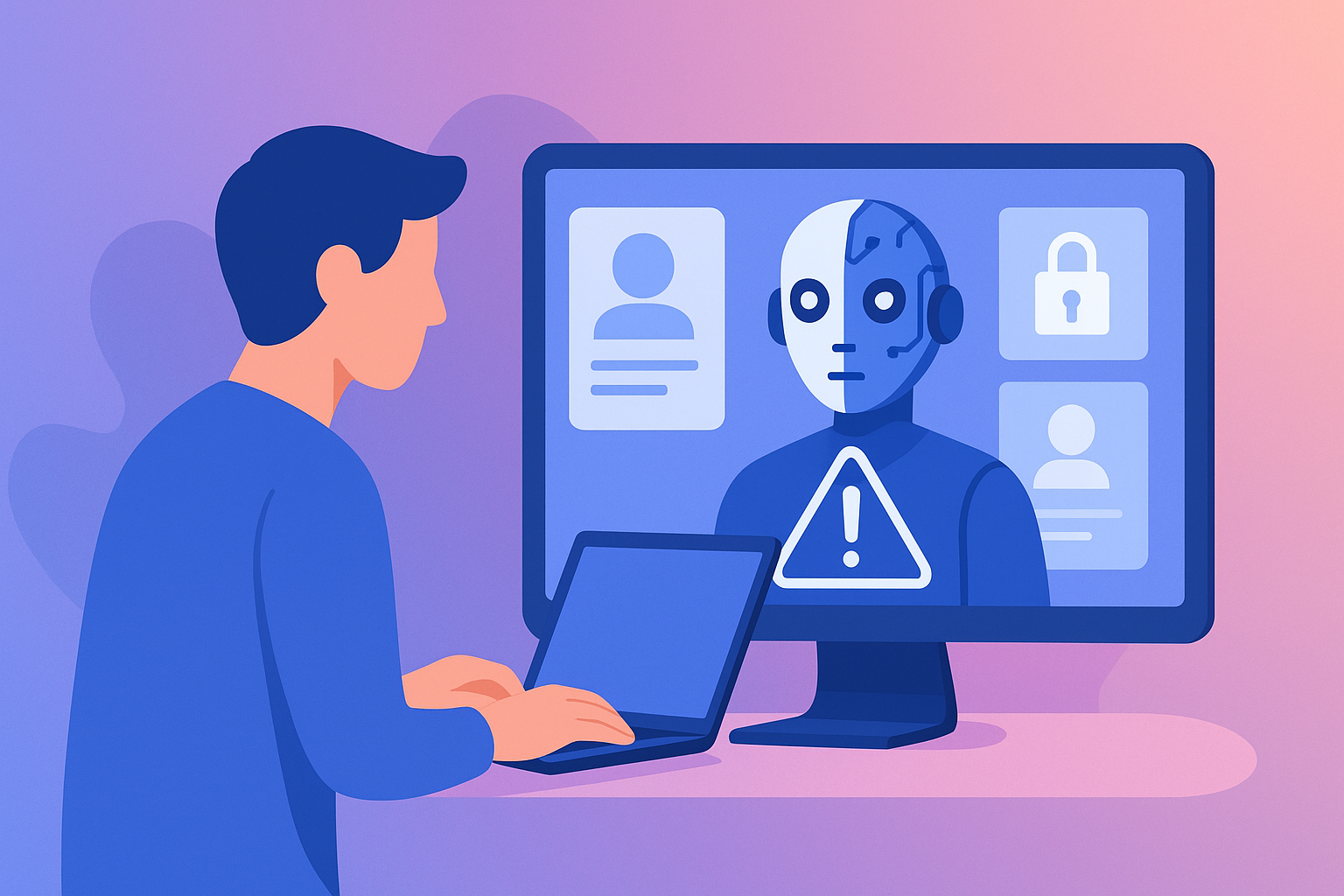
AI identity threats refer to the use of artificial intelligence technologies to impersonate individuals, fabricate identities, or manipulate digital verification systems. These threats exploit the growing sophistication of machine learning models capable of mimicking human behaviour, voice, and appearance with remarkable accuracy. As a result, attackers can deceive both people and automated systems.
Unlike traditional cyber threats, which often rely on brute force or simple deception, AI-driven attacks are adaptive and scalable. This makes them particularly dangerous for organisations that rely heavily on digital interactions. Synthetic media and automated fraud techniques are becoming common tools for cybercriminals seeking to exploit vulnerabilities in identity verification processes.
Common Types of AI-Driven Identity Attacks
AI identity threats appear in various forms, each designed to bypass different layers of security. Recognising these attack types is critical to building effective defences and ensuring long-term resilience.
One of the most concerning developments is the rise of deepfake technology, which enables attackers to create highly realistic video and audio impersonations. This can be used in fraud schemes, social engineering, or even corporate espionage.
- Deepfake impersonations: AI-generated videos or audio clips that mimic real individuals.
- Automated phishing campaigns: AI-generated emails and messages tailored to specific targets.
- Synthetic identities: Fabricated profiles combining real and fake data to bypass verification systems.
- Voice cloning attacks: Replicating voices to gain trust or authorise transactions.
These methods demonstrate how AI-powered deception is evolving beyond simple scams into complex, multi-layered threats that are difficult to detect using traditional tools.
Why Traditional Security Measures Fall Short
Many existing security frameworks were not designed to handle the sophistication of AI identity threats. Passwords, basic multi-factor authentication, and static identity checks are increasingly inadequate when faced with adaptive, intelligent attacks.
For instance, biometric systems can be tricked by high-quality deepfakes, while automated fraud detection systems may struggle to distinguish between legitimate and AI-generated behaviour. Static verification methods are particularly vulnerable because they rely on fixed data points that can be replicated or manipulated.
Furthermore, AI tools can analyse large datasets to identify weaknesses in security protocols. This allows attackers to continuously refine their tactics, making traditional defence mechanisms less effective over time.
The Growing Importance of Identity Verification
As AI-driven threats increase, robust identity verification has become a cornerstone of digital security. Verifying that a user is genuinely who they claim to be is essential for preventing fraud, protecting sensitive data, and maintaining trust.
Modern identity verification systems go beyond simple checks, incorporating behavioural analysis, document validation, and real-time monitoring. These systems can detect inconsistencies and flag suspicious activity before it escalates into a serious breach.
A reliable solution such as PRVEN offers advanced verification capabilities designed to combat evolving threats. By integrating secure and verifiable identity records, organisations can significantly reduce exposure to fraud. You can learn more at https://identity.prven.org.

Best Practices for Mitigating AI Identity Threats
Mitigating AI identity threats requires a proactive and multi-layered approach. Organisations must combine advanced technology with strategic processes to stay ahead of evolving risks.
Implementing the following measures can significantly strengthen your security posture:
- Adopt multi-layered verification: Combine biometrics, behavioural analysis, and document checks.
- Use AI for defence: Deploy AI systems to detect anomalies and suspicious patterns.
- Continuously update systems: Regularly refine algorithms and security protocols.
- Educate employees: Train staff to recognise AI-generated scams and phishing attempts.
- Monitor user behaviour: Identify unusual activity in real time.
By integrating these strategies, organisations can build resilient identity protection frameworks capable of preventing even the most sophisticated attacks.
The Future of Digital Identity Security
The future of identity security will be shaped by the ongoing battle between innovation and exploitation. As AI technology continues to advance, so too will the methods used by cybercriminals. This makes continuous adaptation essential.
Emerging trends include decentralised identity systems, blockchain-based verification, and AI-driven authentication tools. These innovations aim to create tamper-resistant identity ecosystems that are harder to compromise.
Organisations that invest in forward-thinking solutions today will be better prepared for tomorrow’s challenges. A strong focus on trust, transparency, and verification accuracy will define successful security strategies in the years ahead.
Conclusion: Strengthening Trust in an AI-Driven World
AI identity threats present a complex and evolving challenge that demands immediate attention. From deepfake impersonations to synthetic identities, the risks are increasing in both scale and sophistication.
By prioritising advanced identity verification and adopting a proactive approach to security, organisations can protect themselves against these threats. The key lies in combining technology, awareness, and strategic planning to stay one step ahead.
Ultimately, building a secure digital environment depends on trust. Investing in reliable verification solutions ensures that identities remain authentic, interactions remain secure, and organisations remain protected.
Verify Your Identity with PRVEN
As fraud, impersonation, and AI-generated misuse become more common online, proving that you are real is becoming increasingly important. PRVEN helps you create a trusted verification record that others can rely on.