

Digital identity verification is no longer just a convenience; it is a necessity in a world where impersonation and fraud are increasingly sophisticated. PRVEN introduces a privacy-first approach by applying SHA-256 reference image hashing, enabling secure verification without storing biometric data.
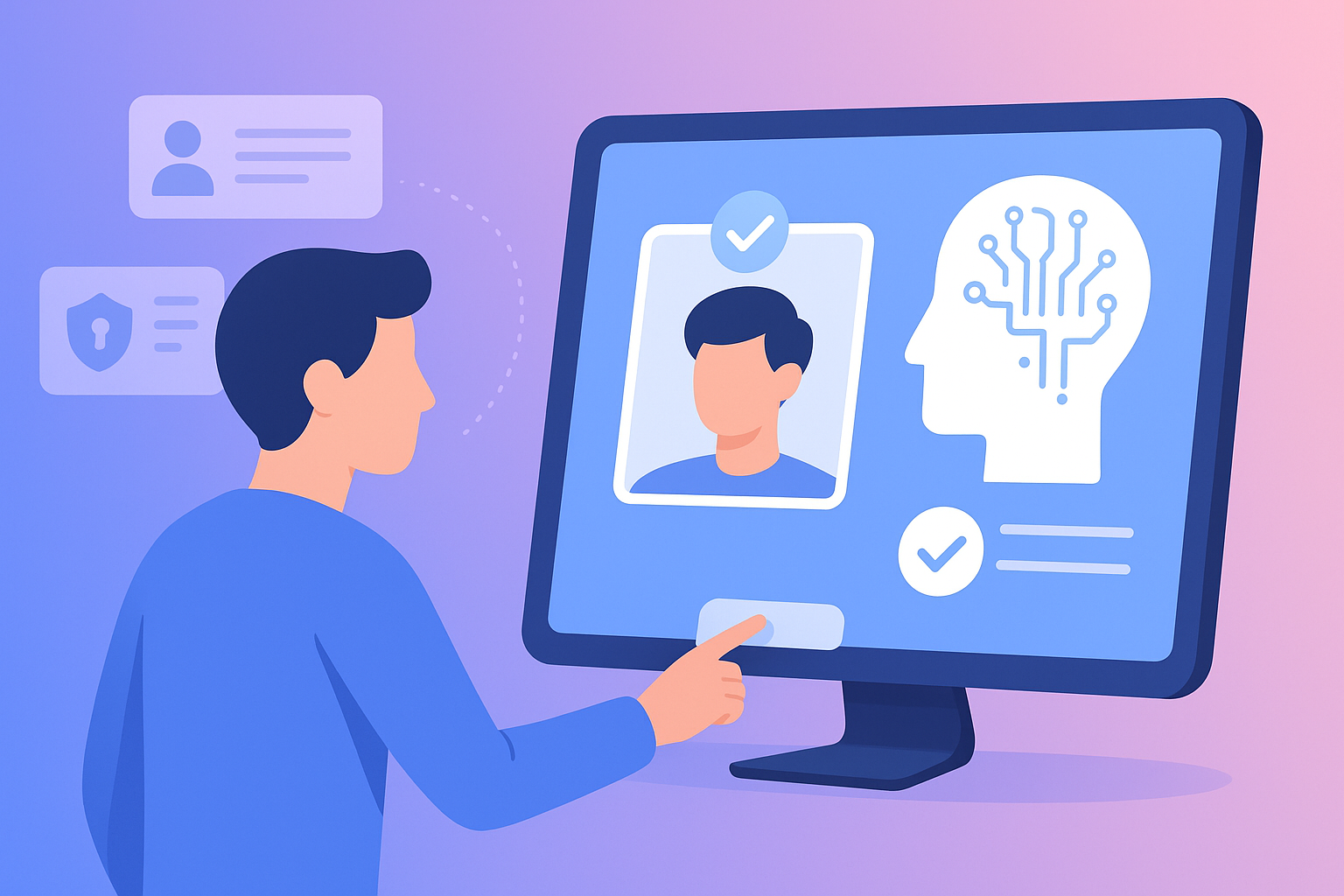
Understanding Privacy-Focused Identity Verification
Traditional identity verification systems often rely on storing sensitive biometric data, such as facial images or templates. These systems typically create centralised databases, which introduce long-term risks if compromised.
Privacy-focused identity verification takes a different approach. Instead of storing reconstructable personal data, it minimises what is retained after verification, significantly reducing exposure to breaches and misuse.
PRVEN is built around this principle. Rather than creating a biometric database, it performs a one-time verification event and stores only what is necessary to prove that the event occurred.
This represents a shift towards systems where trust is established without long-term data storage.
How PRVEN Uses SHA-256 Reference Image Hashing
At the core of PRVEN’s privacy model is SHA-256 hashing, a widely trusted cryptographic algorithm designed to produce a fixed-length, irreversible output.
After a successful verification, the original reference image is permanently deleted. A SHA-256 hash of that image is then generated and stored as part of the verification record.
This hash acts as a tamper-resistant fingerprint of the original image. It allows the system to prove that a specific image was used during verification, without retaining the image itself.
Importantly, the hash is not used to perform biometric matching. Identity verification is completed during the live liveness check. The hash exists purely as a secure reference anchor for the verification record.
This ensures that no reconstructable biometric data is retained, while still preserving the integrity of the verification event.
Privacy by Design: No Face Storage
A defining feature of PRVEN is that it does not store full-resolution facial images after verification.
Once the verification process is complete:
- The original reference image is deleted permanently
- A SHA-256 hash is stored
- A low-resolution, watermarked thumbnail may be retained (if enabled)
This means:
- No biometric database is created
- No facial recognition index exists
- No long-term storage of sensitive identity data
This significantly reduces the risk associated with data breaches and misuse.
PRVEN is designed to prove that a verification event occurred — not to store or track identities.
What the Hash Actually Does
The SHA-256 hash plays a specific and limited role within the PRVEN system.
It is used to:
- Anchor the verification record to the original reference image
- Provide a tamper-resistant proof that the image existed at the time of verification
- Support the integrity of the public verification record
It does not:
- Store biometric data
- Enable facial recognition
- Allow reconstruction of the original image
This distinction is critical. The hash is a cryptographic proof mechanism, not a biometric database.
What a PRVEN Verification Actually Proves
A PRVEN verification confirms that a real human completed a biometric liveness check at a specific point in time.
It verifies that:
- A live human was present during verification
- The live capture matched the submitted reference image
- The verification passed defined similarity and confidence thresholds
However, it is important to understand what it does not prove.
A PRVEN verification does not guarantee identity, behaviour, or ongoing authenticity. It reflects only the outcome of that specific verification event.
This transparency is essential for building trust.
Preventing Fraud and Impersonation
Identity fraud is evolving rapidly, with AI-generated images and deepfakes making impersonation easier than ever.
PRVEN addresses this at two levels:
First, biometric liveness verification ensures that a real human is present during the verification process.
Second, the hashed reference image ensures that the verification record cannot be altered or replaced after the event.
This combination reduces the effectiveness of:
- Stolen or reused photos
- Deepfake-generated faces
- Manipulated identity records
By securing both the verification process and the resulting proof, PRVEN creates a stronger defence against impersonation.
Public Verification Without Data Exposure
Each successful verification generates a public verification page that can be shared.
This page includes:
- Verification timestamp
- Region
- Similarity score
- Confidence score
- Verified human status
Crucially, it does not expose private identity data.
The stored hash ensures the integrity of the record, while the public page allows others to independently verify that a real human completed the process.
This creates a system of verifiable trust without requiring data sharing.
Why PRVEN Is Different
Most identity verification systems are designed for internal platform use. They verify users behind the scenes and store biometric data for ongoing access control.
PRVEN takes a fundamentally different approach.
It is designed as a public verification system that creates a shareable proof record, without building a biometric database.
This means:
- No ongoing tracking
- No stored facial templates
- No hidden identity scoring
Instead, PRVEN focuses on proving that a real human completed a verification event — and making that proof independently verifiable.
Advantages Over Traditional Systems
Compared to traditional biometric systems, PRVEN offers several key advantages:
- No centralised storage of sensitive biometric data
- Strong resistance to data breaches
- Privacy-first architecture
- Transparent, verifiable proof of identity events
This makes it particularly suited to a world where both security and privacy are equally important.
The Future of Secure Digital Identity
As digital interactions continue to grow, the need for secure and privacy-conscious identity verification will intensify.
Future systems will likely move away from storing sensitive data and towards models that rely on cryptographic proof and event-based verification.
PRVEN reflects this shift by combining biometric verification with privacy-preserving architecture.
By eliminating the need for long-term biometric storage, it aligns with both regulatory expectations and user demand for greater control over personal data.
Create Your Verified Human Record
As AI-generated content, impersonation, and deepfakes continue to rise, proving you are real is becoming essential.
PRVEN allows you to:
- Verify your identity in minutes
- Generate a public, shareable proof record
- Protect yourself against impersonation and misuse
Create your verification record now:
https://identity.prven.org