
Digital identity now sits at the centre of online trust, where proving you are a real person can determine access, safety, and credibility. As deepfakes and AI-generated identities become more convincing, traditional verification methods are no longer enough.
Biometric liveness verification provides a critical safeguard, allowing systems to confirm that a real human is physically present — not a photo, video, or synthetic replica.
PRVEN builds on this by combining biometric liveness verification with a privacy-first, proof-based system that allows individuals to prove they are real without storing sensitive data.
Understanding Biometric Liveness Verification
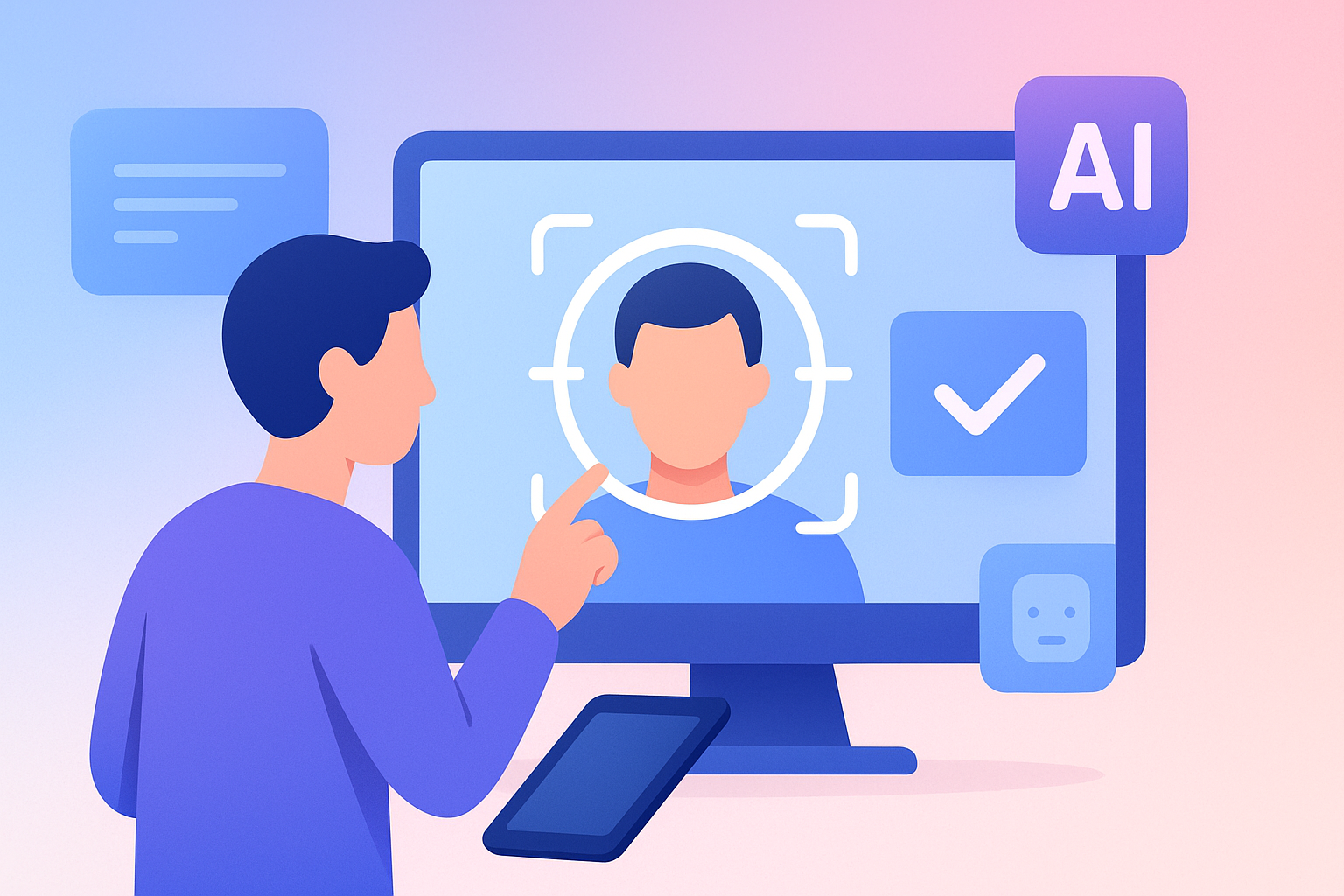
Biometric liveness verification is a method used to confirm that a biometric sample, such as a face, is captured from a live human rather than a static image, video, or synthetic replica.
This is essential in detecting spoofing attempts, including:
- Deepfake videos
- AI-generated faces
- Printed photos
- Screen replays
The process works by analysing subtle real-time signals such as:
- Facial movement
- Depth and spatial structure
- Light reflection and texture
- Micro-expressions and timing
These signals are extremely difficult to replicate convincingly using artificial methods.
Unlike basic identity checks, liveness detection introduces a dynamic layer of security. It transforms identity verification from a static comparison into a real-time validation process, significantly reducing the success rate of impersonation attempts.
Why Identity Verification Matters More Than Ever
The rapid growth of digital platforms has made identity verification a necessity rather than an option.
From financial services to content creation, verifying identity is critical for:
- Preventing fraud and impersonation
- Protecting users and platforms
- Building trust in online interactions
AI has fundamentally changed the threat landscape.
Deepfakes, synthetic identities, and automated impersonation are now accessible at scale. Without strong verification systems, it becomes increasingly difficult to distinguish real people from artificial or manipulated identities.
This is why the ability to prove you are human online is becoming a core requirement — not just a security feature.
The Role of AWS in Powering Liveness Verification
PRVEN uses AWS-powered infrastructure to perform biometric liveness verification at scale.
AWS provides:
- High-performance processing for real-time analysis
- Advanced machine learning capabilities
- Global infrastructure for speed and reliability
- Strong security and compliance standards
This allows PRVEN to deliver fast, accurate verification without compromising reliability.
Importantly, AWS powers the verification process itself — not long-term data storage. PRVEN does not build a biometric database on top of this infrastructure.
How PRVEN Verifies a Real Human
PRVEN uses a one-time biometric verification process designed to confirm real human presence without ongoing tracking.
The process works as follows:
- A user uploads a reference image
- A live liveness check is performed
- The system confirms that the live subject matches the reference image
- A verification record is created
This entire process is completed in real time.
There is no continuous monitoring, no behavioural tracking, and no ongoing identity profiling.
Instead, PRVEN verifies a single event — that a real human completed the process at that moment.
Privacy by Design: No Face Storage
A defining feature of PRVEN is that it does not store full-resolution facial images after verification.
Once verification is complete:
- The original reference image is permanently deleted
- No liveness capture is stored
- No biometric templates are created
Instead:
- A SHA-256 hash of the reference image is generated
- A low-resolution, watermarked thumbnail may be stored (if enabled)
This means:
- No biometric database exists
- No facial recognition index is maintained
- No sensitive identity data is retained
This significantly reduces the risk of data breaches and misuse.
PRVEN is designed to prove that a verification event occurred — not to store identities.
What a PRVEN Verification Actually Proves
A PRVEN verification confirms that a real human successfully completed a biometric liveness check at a specific point in time.
It proves that:
- A live human was physically present
- The live capture matched the reference image
- The verification passed defined thresholds
- The event occurred at a specific time and region
However, it does not:
- Guarantee identity beyond that event
- Confirm behaviour or intent
- Provide ongoing authentication
This is a proof system, not an identity database.
That distinction is critical for both accuracy and trust.
The Role of Hashing in Verification Integrity
After verification, PRVEN generates a SHA-256 hash of the reference image.
This hash acts as a cryptographic fingerprint that:
- Anchors the verification record to the original image
- Ensures the record cannot be altered
- Provides tamper-resistant proof
Importantly, the hash:
- Cannot be reversed into the original image
- Does not store biometric data
- Is not used for facial recognition
It exists purely to preserve the integrity of the verification event.
Public Verification You Can Share
Each successful verification generates a unique public verification page.
This page includes:
- Verified human status
- Timestamp
- Region
- Similarity score
- Confidence score
No private identity data is exposed.
These pages are:
- Accessible via direct link
- Not part of a searchable public directory
- Controlled by the user
This allows others to independently verify identity without relying on screenshots or trust claims.
Why PRVEN Is Fundamentally Different
Most identity verification systems are designed for internal use.
They:
- Store biometric data
- Track users over time
- Operate as closed systems
PRVEN takes a different approach.
It creates a public, verifiable proof record without building a biometric database.
This means:
- No ongoing tracking
- No stored facial templates
- No hidden identity scoring
- No platform lock-in
Instead, PRVEN focuses on one clear outcome:
Proving that a real human completed a verification event — and making that proof independently verifiable.
Combating Deepfakes and Spoofing Attacks
Deepfake technology has made impersonation significantly more convincing.
PRVEN counters this through:
- Real-time liveness detection
- Analysis of physical human signals
- Event-based verification that cannot be replayed
This makes it extremely difficult to bypass using:
- AI-generated faces
- Recorded videos
- Static images
By requiring real-time human presence, PRVEN creates a strong defence against modern impersonation techniques.
Benefits for Businesses and Individuals
PRVEN delivers value for both individuals and organisations.
For businesses:
- Reduced fraud and impersonation risk
- Stronger trust signals
- Faster onboarding without document handling
For individuals:
- A simple way to prove you are human online
- Protection against impersonation
- A shareable, verifiable identity record
This balance of security, speed, and privacy is critical for modern adoption.
The Future of Identity Verification
As AI continues to evolve, identity verification will shift towards:
- Event-based proof models
- Cryptographic integrity mechanisms
- Privacy-first architectures
Systems that rely on storing sensitive data will become increasingly risky.
PRVEN reflects the next generation of identity verification — one that prioritises proof over storage, and trust over data collection.
Create Your Verified Human Record
As deepfakes, impersonation, and AI-generated content continue to rise, proving you are real is becoming essential.
PRVEN allows you to:
- Verify your identity in minutes
- Generate a public, shareable proof record
- Protect yourself against impersonation and deepfakes
Create your verification record now:
https://identity.prven.org