
A familiar voice on the phone asking for urgent help used to be comforting. Now, with the rise of AI generated voices in scams, that same moment can quickly turn into a costly deception.
Fraudsters are increasingly using sophisticated tools to clone voices and impersonate trusted individuals, leaving both people and organisations exposed. Understanding how these scams work—and how identity verification can stop them—is essential in today’s digital landscape.
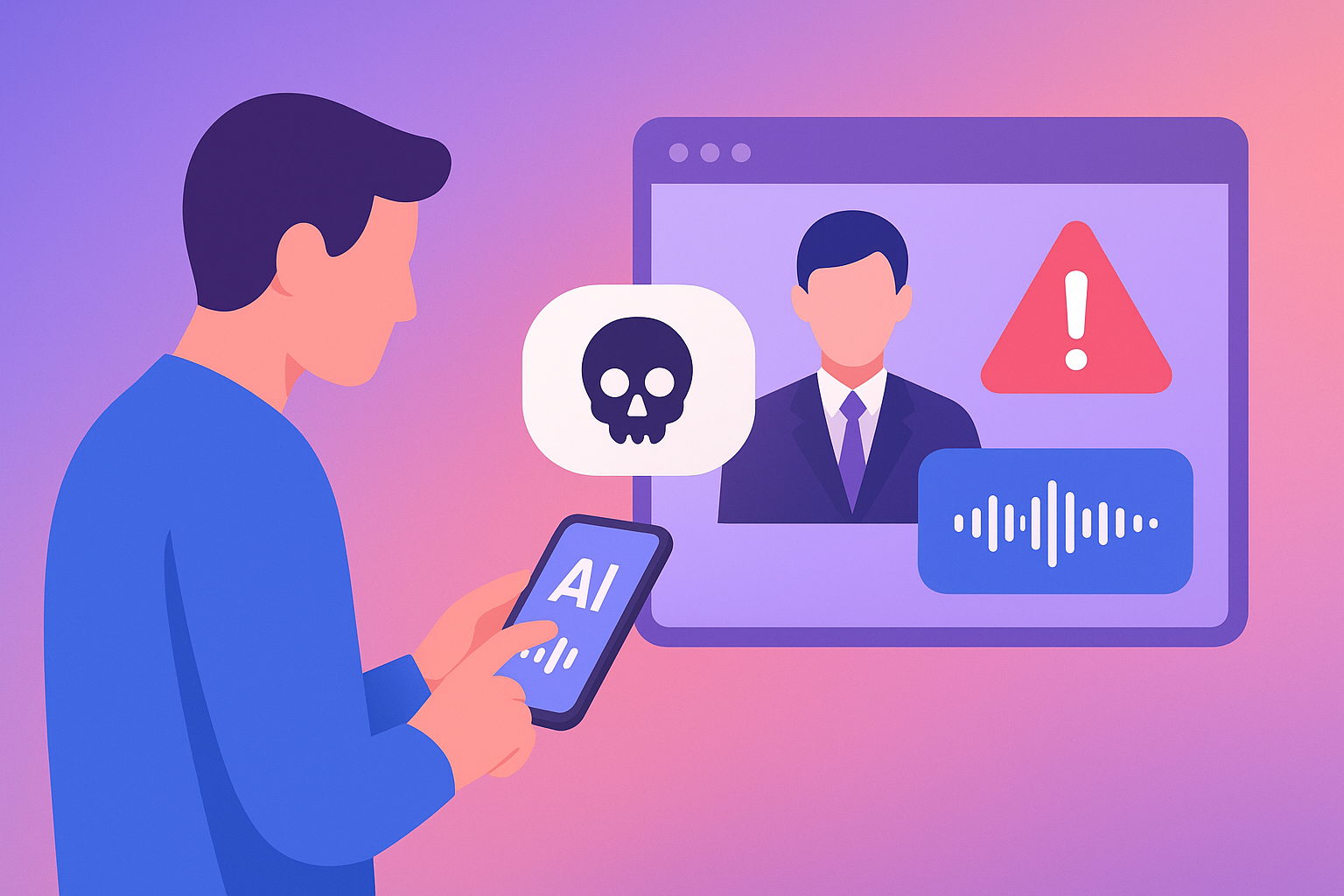
Understanding AI-Generated Voice Scams
AI-generated voice scams rely on machine learning models trained on small audio samples to replicate a person’s tone, cadence, and speech patterns. What once required extensive recordings can now be achieved with just a few seconds of audio sourced from social media or public content.
This technology allows scammers to convincingly impersonate family members, executives, or colleagues. A common scenario involves a call claiming urgency—such as a medical emergency or a time-sensitive financial request—designed to pressure the victim into acting quickly.
The realism of these voices can be unsettling. Unlike traditional phishing attempts, which often contain visible errors, voice deepfakes feel personal and authentic, making them far more effective in manipulating emotions and trust.
As adoption of AI tools grows, so too does their misuse, creating a new frontier of fraud that is harder to detect and prevent without additional safeguards.
Why These Scams Are So Effective
The success of these scams lies in their ability to exploit human psychology. People are naturally inclined to trust familiar voices, especially when they sound distressed or authoritative. Emotional urgency combined with perceived authenticity often overrides rational caution.
Additionally, many victims are unaware that such convincing voice cloning is even possible. This knowledge gap makes them more susceptible to manipulation, as the idea of a perfectly replicated voice still feels improbable to many.
Businesses face similar risks. Fraudsters may impersonate executives to instruct employees to transfer funds or share sensitive information. This tactic, sometimes known as “CEO fraud”, becomes far more dangerous when supported by realistic audio impersonation.
- AI-generated voices can replicate tone and emotion convincingly.
- Scenarios often involve urgency to discourage verification.
- Victims trust what they believe is a known contact.
Without proper verification processes, even vigilant individuals can fall victim to these increasingly sophisticated attacks.
The Role of Identity Verification in Preventing Fraud
To counter these threats, identity verification has become a critical defence mechanism. It ensures that individuals engaging in sensitive communication or transactions are genuinely who they claim to be.
Modern identity verification goes beyond simple passwords or security questions. It can include biometric checks, document verification, and secure digital identity records that are difficult to replicate or forge.
When applied effectively, these systems create an additional layer of trust. Even if a scammer successfully imitates someone’s voice, they cannot easily bypass robust verification protocols.
Solutions like PRVEN help individuals and organisations establish trusted, verifiable identities that can be used to confirm authenticity in real-time. This reduces reliance on voice recognition alone and significantly lowers the risk of impersonation fraud.
Ultimately, identity verification shifts the focus from “Does this sound real?” to “Can this identity be proven?”—a far more reliable standard in a world of advanced AI.

Practical Steps to Protect Yourself and Your Organisation
While technology plays a major role in prevention, awareness and proactive behaviour are equally important. Combining human vigilance with strong verification practices creates the most effective defence against AI-driven scams.
Start by questioning unexpected or urgent requests, even if they appear to come from someone you trust. Verifying through a secondary channel—such as calling back on a known number—can quickly expose fraudulent attempts.
Organisations should establish clear protocols for sensitive actions like financial transactions or data sharing. These processes should require multi-step verification rather than relying on a single form of communication.
- Always confirm unusual requests through an independent method.
- Limit publicly available voice recordings where possible.
- Implement multi-factor or biometric identity verification systems.
- Educate employees and stakeholders about emerging scam tactics.
Building a culture of verification helps normalise caution without creating unnecessary friction. Over time, this reduces the effectiveness of even the most convincing scams.
The Future of AI and Digital Trust
As AI continues to advance, the line between real and synthetic interactions will become increasingly blurred. Digital trust will depend less on perception and more on verifiable proof.
This shift presents both challenges and opportunities. While scammers will continue to refine their techniques, businesses and individuals can leverage the same technological progress to strengthen security and authentication.
The key lies in adopting systems that are resilient against manipulation. Identity verification, especially when integrated seamlessly into communication workflows, ensures that trust is based on evidence rather than assumption.
In this evolving landscape, those who prioritise verification will be far better equipped to navigate risks and maintain confidence in their interactions.
Conclusion: Staying Ahead of AI-Driven Fraud
The rise of AI-generated voice scams marks a turning point in how fraud is executed and perceived. What was once easy to spot has become alarmingly convincing, requiring new strategies to stay protected.
By embracing identity verification and adopting cautious communication practices, both individuals and organisations can significantly reduce their vulnerability. The goal is not to eliminate trust, but to reinforce it with reliable proof.
As technology continues to evolve, staying informed and proactive will be essential. Those who adapt quickly will not only avoid falling victim but will also set a stronger standard for digital security in an increasingly complex world.
Verify Your Identity with PRVEN
As fraud, impersonation, and AI-generated misuse become more common online, proving that you are real is becoming increasingly important. PRVEN helps you create a trusted verification record that others can rely on.