
Proving that someone is genuinely human online has become increasingly difficult, especially as AI-generated identities grow more convincing. The rise of impersonation and synthetic media is forcing individuals and platforms alike to rethink how digital trust is established.
Identity verification is no longer optional; it is becoming a necessary foundation for credibility in a digital-first world. As AI identity trends accelerate, understanding how verification works—and what it can realistically prove—helps individuals and organisations navigate online interactions with greater clarity.
Understanding AI Identity Trends
In an age where digital interactions dominate, the risk of identity theft and impersonation has escalated dramatically. A growing number of people are encountering fake profiles, deepfake videos, and AI-generated personas that appear indistinguishable from real individuals. The line between authentic and synthetic identity is becoming increasingly blurred, creating uncertainty across social platforms, professional networks, and digital communities.
One of the defining trends is the accessibility of AI tools. What once required advanced technical expertise can now be achieved with consumer-level software, allowing bad actors to generate convincing faces, voices, and behaviours. This shift has amplified the scale at which impersonation can occur.
As a result, digital identity is moving from assumption to verification. Instead of trusting what appears real, users are beginning to expect proof that a real human was present at a specific point in time.
How Identity Verification Prevents Impersonation
Identity verification is crucial in combating impersonation and fraud, particularly in the context of AI identity trends. By confirming that a real human completed a verification process, platforms and individuals can reduce ambiguity in online interactions.
Modern approaches increasingly rely on biometric liveness verification, which requires a live capture during the verification process. This ensures that the subject is physically present, rather than a static image or manipulated content.
A solution like biometric identity verification through PRVEN focuses on creating a record of that event without storing sensitive biometric data. Instead of building a database of faces, it generates a timestamped proof that a verification event occurred.
- AI-driven impersonation attempts rely on static or pre-generated content
- Liveness verification requires real-time human presence
- Verification records create accountability and traceability
This model does not claim to guarantee identity or behaviour. Rather, it provides evidence that a real human completed a verification step, which can then be shared publicly to support trust.
The Role of Public Proof in Digital Trust
One of the key challenges in digital identity is not just verifying someone once, but making that verification visible and usable. Without a shareable outcome, verification remains siloed and ineffective.
Public proof records solve this problem by allowing individuals to demonstrate that they have completed a biometric verification event. These records typically include a timestamp, verification result, and supporting data points, without exposing sensitive personal information.
This approach changes how trust is communicated online. Instead of relying on claims, users can point to a verifiable record that confirms a real human interaction took place. It shifts digital identity from subjective perception to objective verification evidence.
Why Privacy Matters in Biometric Verification
While biometric verification offers strong assurance, it raises legitimate concerns around data storage and misuse. Many systems rely on storing biometric templates or building centralised databases, which can introduce long-term risk.
Privacy-focused models take a different approach. They avoid storing biometric data altogether, instead retaining only minimal artefacts such as hashes or low-resolution thumbnails. This ensures that verification can still be proven without creating a persistent biometric footprint.
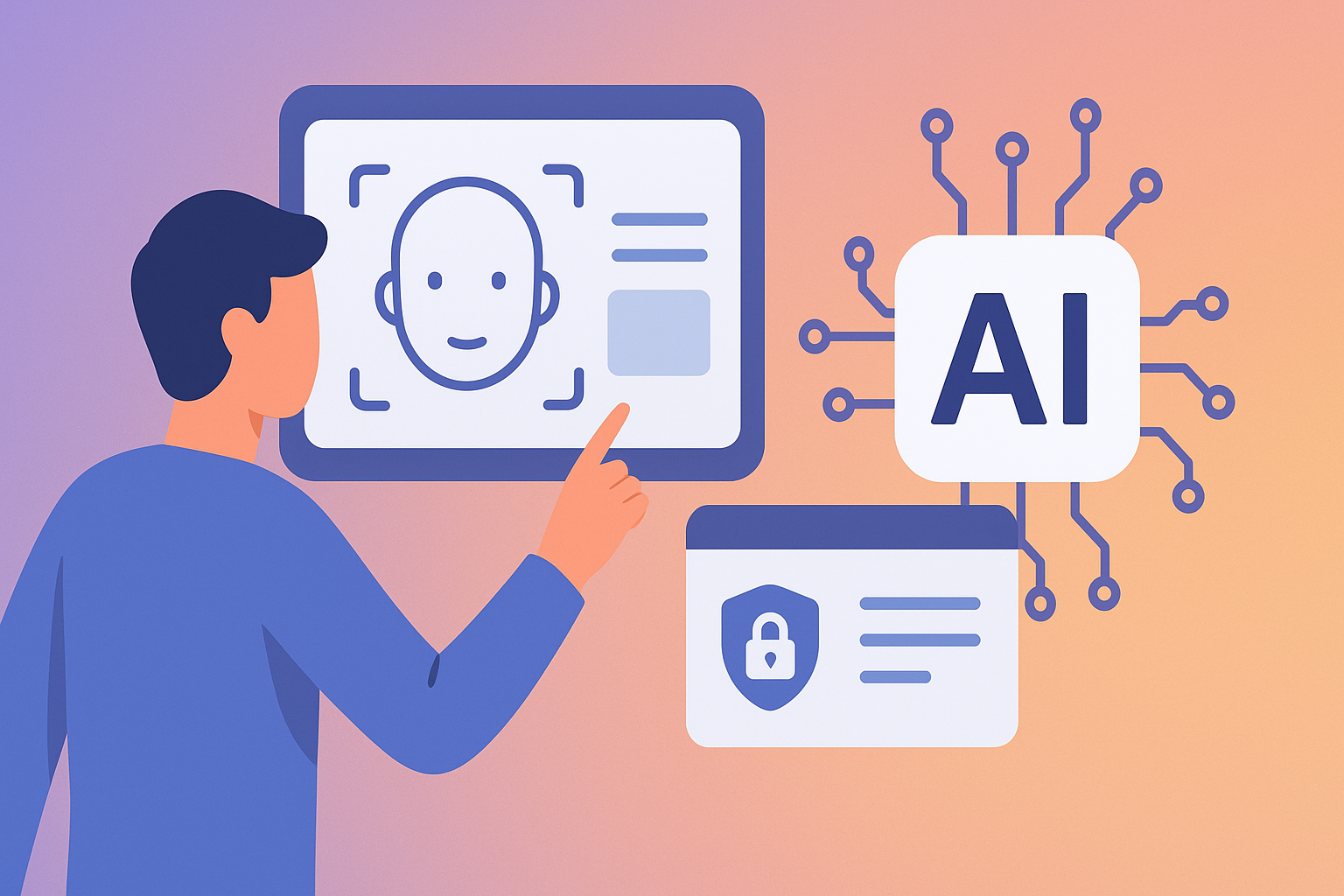
This balance between verification and privacy is critical. Users are more likely to adopt identity solutions that respect their data while still providing meaningful proof of authenticity.
Limitations of Identity Verification Systems
It is important to understand what identity verification can and cannot do. No system can fully guarantee identity or future behaviour, and suggesting otherwise creates false confidence.
Verification systems are designed to confirm that a process took place under certain conditions. For example, they can indicate that a real human was present during a biometric liveness check at a specific time.
They do not:
- Continuously monitor users
- Detect deepfakes across the internet
- Prevent all forms of impersonation
- Guarantee long-term authenticity
Understanding these boundaries helps maintain realistic expectations. Verification is a tool for reducing uncertainty, not eliminating it entirely.
AI Identity Trends and the Future of Online Presence
As AI-generated content becomes more embedded in everyday interactions, the concept of a “verified human presence” is likely to grow in importance. Platforms, audiences, and collaborators will increasingly look for signals that distinguish real individuals from synthetic entities.
This shift may lead to a new standard where having a verification record becomes part of maintaining a credible online identity. Much like verified badges on social media, but with stronger underlying proof, these records could serve as a baseline layer of trust.
For creators, professionals, and public figures, this is particularly relevant. Their reputations depend on authenticity, and any ambiguity can damage credibility. A clear, privacy-conscious verification method helps reinforce their legitimacy without overexposing personal data.
Conclusion: Building Trust in an AI-Driven World
The growth of AI identity trends is redefining how trust is established online. As impersonation techniques become more sophisticated, relying on appearance alone is no longer sufficient.
Identity verification introduces a grounded, evidence-based approach to digital trust. By proving that a real human was present during a verification event, it offers a practical way to reduce uncertainty without overpromising or compromising privacy.
Solutions like PRVEN demonstrate how verification can be implemented responsibly—focusing on proof rather than surveillance, and privacy rather than data accumulation. As digital environments continue to evolve, this balance will become increasingly important for individuals seeking to establish and maintain authentic online identities.
Verify Your Identity with PRVEN
As fraud, impersonation, and AI-generated misuse become more common online, proving that you are real is becoming increasingly important. PRVEN helps you create a trusted verification record that others can rely on.